The popularised story behind the Irish Tricolour holds the flag was first flown in Waterford on March 7th 1848 by Thomas Francis Meagher. He had allegedly received the flag from a group of sympathetic French woman. So popular is the story, it will surprise many to learn not a word of this is true. The flag flown in Waterford was French, but of more importance, Irish tricolours had been around for almost two decades by this point.
In reality, the first Irish tricolours emerged in Ireland in 1830, appearing as a green-orange device in cockade (rosette) and flag form before the addition of white. Who was the first to fuse the three colours we recognise in the flag today and assign it a message of peaceful union between Ireland’s main religions? That is a story worth telling.

Emelia Hamilton crafted the first Irish Tricolour of green, orange and white in September 1830, inspired by the words of Daniel O’Connell and the actions of the French Revolution of that year. In March 1830, following years of O’Connell calling for ‘orange and green to blend their colours’, a first physical union occurred at a political event in Cork City, March 1830. It was a green-orange cockade, or rosette, its message of union complimented by a speaker. Within months green-orange flags were in use to suggest unity between the factions, a situation which continued for the next two decades.
The eruption of the French Revolution in July 1830 saw French tricolours waving across Ireland. Duly inspired by both the Irish green – orange device and French flags, Emelia Hamilton added white to Ireland’s ‘national’ colours. She crafted her cockade and gave it its meaning with two lines from an accompanying poem –
“Let orange and green no longer be seen, bestained with the blood of our island”
Within weeks it was proposed as a national flag, within months appearing in flag, banner and other forms. It got a national launch at an event to welcome O’Connell from taking his seat in Parliament in December, 1830.
Who was this woman who stepped above her station, at a time when women were excluded from politics, their opinion uninvited?

In tracing the enigmatic Emilia Eleanor Hamilton (occasionally spelt Amelia or Emelia in sources) we have little to go on. No census records exist to attest to her life. The first researchers to identify her input, Hayes McCoy and Patrick Patrick O’Connor in the 1940’s, located only the spirted letter that accompanied her tricolour donation, reprinted in the Irish Book Lover in 1940 having first appeared in The Irish Rushlight in 1831.
Digging deeper to confirm Emelia’s role and place in history, I was able to find a handful of newspaper references discussing her donation of a Tricolour rosette. These reveal Emelia’s address to be Annadale Cottage, Philipsburg Avenue, Dublin, and from this simple fact a world of insight into her life is opened. The address appears again with the notice of her mothers death in 1838.
‘After a fortnight’s illness, in her 66th year, and surrounded by her husband and children, Mrs Emilia Hamilton, of Annadale Cottage, which that benevolent and pious lady had contributed to embellish by her taste, and for which she had received some interesting mineral and floral tributes from distant portions of the globe. There’s “the bower she loved so much, and the tree she planted;” including the fellow olive to the queen’s, growing amongst the stones and soil of Sion’.
This reveals Emelia shared her name with her mother, with an ‘e’ instead of an ‘I’. This record also points towards the burial location of the family, a fact shared with this author following genealogy work by Thomas Brunkard. Emilia Hamilton was buried in Glasnevin Cemetery, Dublin, where she was eventually joined by Emelia and her sister, Teresa. Teresa, who was born in 1815 and died in 1890 aged 75. Her mother, Emilia, is recorded as having died 15-06-1838 aged 65, a slight variation of one year on the newspaper report.
Emelia Hamilton, daughter and creator of the first Irish Tricolour, is listed as having died on 02-11-1897 at 86 years of age (her Glasnevin record incorrectly states 80). This puts her year of birth at 1811. This makes Emelia just 19 years of age when she made the crafted the first Irish Tricolour cockade in 1830. She was very much a product of the Ireland that emerged from the trauma of the 1798 Rebellion, a remarkable period in European and global development also.
Emelia’s parents Emilia and Joseph Hamilton were very much a product of Ireland’s post-penal law landscape, witnesses to the late 18th century which were a time of modest Irish prosperity and advancement among figures like Henry Grattan and Wolfe Tone.

Emilia senior was seventeen when the first French Revolution upended centuries of royal monopoly and nineteen when Thomas Paine wrote his influential Rights of man. She read of America’s successful struggle for self-determination and emerging Republics; her opinion of the world formed at a time of change, much of which can be deemed progress.
We might imagine Emelia, the first Irish Tricolours creator, to be the daughter of a woman motivated by her time, witnessing the early onset of women’s rights and democratic ideals.
Emelia junior was clearly motivated to improve the world around her, judging by the lines from her letter accompanying her tricolour cockade donation. They suggest a familiarity and agreement with the liberal ideas of her time – a necessary revolutions, bill of rights and an expanded and fair voting franchise. From the short lines of her spirited letter, the little they say tell us a lot about Emelia Hamilton.
The revelation of Emelia’s address also allows us to identify her father, Jospeh, a figure for whom records abound in the early 19th century. Annadale Cottage appears over and over again in the records as the residence of author, trade unionist, public servant and human rights activist Joseph Michael John Godfrey Hamilton, often referred to in print as G. Hamilton or Jospeh Hamilton.
Through Joseph we can uncover a treasure throve of information about Emelia, if only through the imperfect lens of her fathers life. This viewpoint implies Emelia lived in a spirited nationalist household; one committed to liberal ideals of public service, improved Irish Catholic rights and peaceful religious coexistence. It is very easy to see where Emelia got her influence from on review of the many works by Joseph Hamilton. Joseph’s input would also explain the well crafted and advanced thinking evident in Emelia’s letter.

While we cannot assume identical political values because of their relationship, Emelia’s letter and Irish tricolour creation suggest political leanings in line with the much-recorded works of her father Joseph. Given her young age when she crafted the tricolour and penned the donation letter, we might suggest her father Joseph had a significant guiding hand in the action, making the home of the Hamilton’s one of great interest – the location and household from which the first Irish Tricolour emerged.
Joseph appeared as a writer around 1820 when he reported on the ‘Lord Mayors Grand Fancy Ball’ for the Saunders Newsletter, becoming a frequent contributor. An 1824 petition reveals much about his life. He converted from Protestant to Catholic in his twenties, mentioning this was more than twenty years before the article making his age around late forties, broadly in line with his wife Emilia senior.
Joseph’s writing reveals a keen student of the late Enlightenment, one who studied multiple faiths and ways of living. He showed a keen interest in Judaism and signed off one of his works with an inscription in Hebrew. The article reveals Joseph was involved in raising awareness for the plight of Ireland’s poor as early as 1811, resulting in the opening of schools. He goes on to assert in first person perspective that ‘there is but one public object, more dear to his heart than a cordial reconciliation of all Christian sects, and the abatement of unworthy prejudices which must involve his country in a civil war…’.
In an eloquent address Joseph denounced the actions of several journals ‘under the influence of bigotry’, who are ‘continually provoking havoc, by pointing to the dogs of war’. Joseph clearly shared Emelia’s wishes for peaceful union, and was willing to denounce those who acted against it.
The sum of Joseph’s life’s work as it relates to the first Irish tricolour designer is clear. The woman, or more accurately given her age of just 19, we might say young woman who conceived the first Irish tricolour, Emelia Hamilton, did not live an isolated life of lonely patriotism. She thrived in a household afloat on a nationalist tide, determined to restore past equalities and win new ones for Ireland’s disadvantaged Catholics. In her father, Emelia had a likeminded activist and supporter and likely a highly influential director in her actions regarding the tricolour donation, particularly its supporting letter.
There are examples of identical use of language, with a letter penned by Joseph in 1832 repeating the wishes of his daughter when she made her cockade donation – ‘May orange and green no longer be seen, b’stain’d with the blood of our island’.
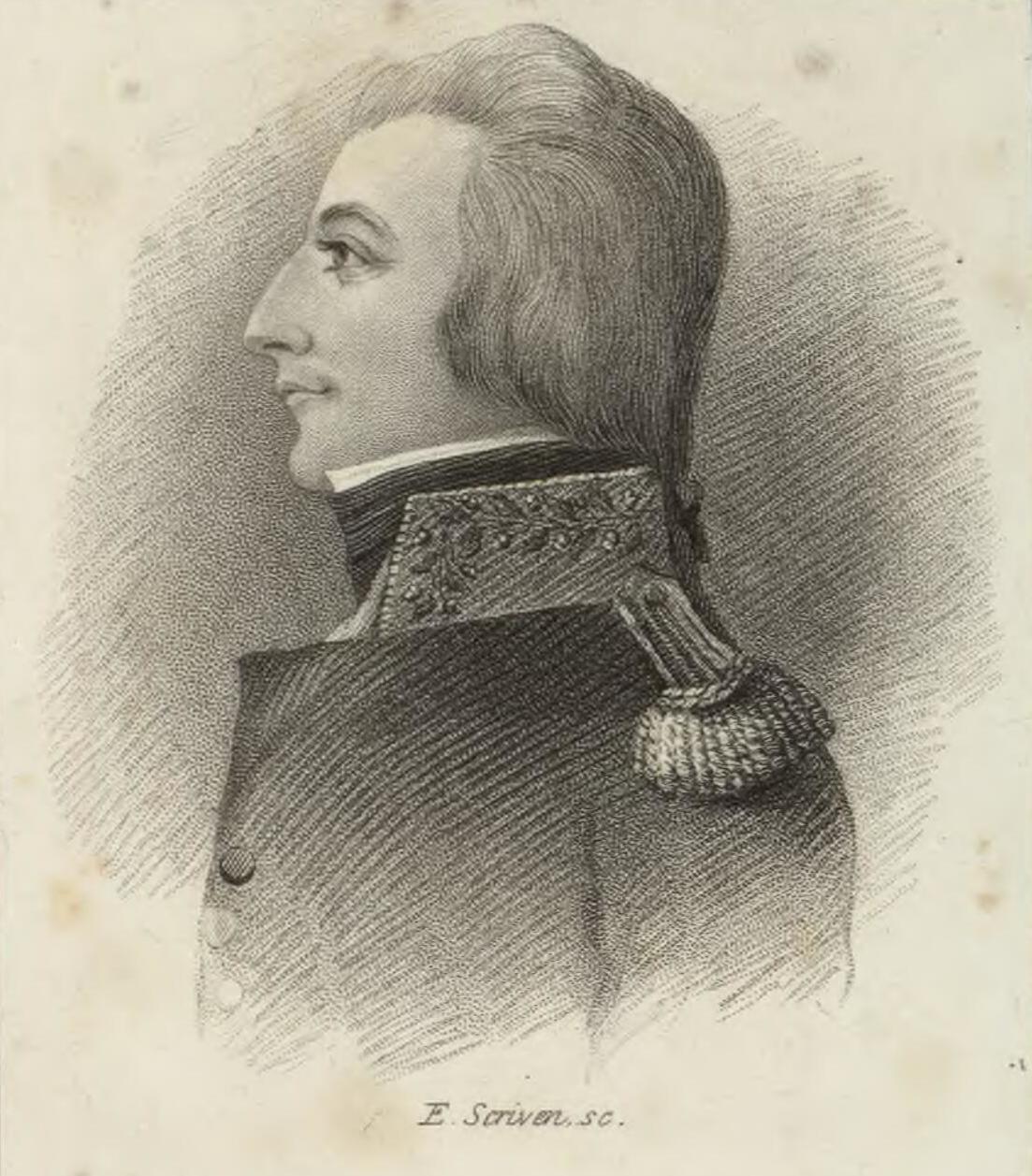
This makes the home of the Hamilton’s an extraordinary place for the first Irish device of green, orange and white to emerge. A homestead actively seeking and working towards a peaceful coexistence and cooperation between Ireland’s Catholics and Protestants, yet one insistent on the need for real change.
A GAELIC IRISH FAMILY TREE
Subsequent to this authors research for the Irish Tricolour, stellar genealogy research by Thomas Brunkard has revealed the family tree of Emelia’s mother to have extraordinary Gaelic Irish links! Emilia senior was born Emilia O’Dougherty, her family having satisfactorily demonstrated to Ireland’s Chief Herald they were descended from the O’Doherty’s of Inishowen, Donegal.
This extraordinary Gaelic clan in Donegal were a sept of the Northern Ui Neill, claiming descent from Connall Gulban, so of Niall of the Nine Hostages. They ruled their lands from the 15th to 17th century, until they staged a rebellion against the ongoing plantations and were dispossessed. There were many splits and family disputes down the centuries, but Emilia senior appears to have been aware of this lineage.
The research also shows Emelia’s mother had been married previously, which explains her more senior age, early 40’s, when she gave birth to Teresa then Emelia.
This Gaelic Irish pedigree on her mothers side makes the home of Emelia Hamilton, the creator of the first Irish Tricolour, an even more extraordinary place for the symbol to first emerge – a home of ancient Irish provenance and current liberal and equalitarian ideals.
A SYMBOL GAINING ATTENTION
Emelia’s Irish Tricolour cockade donation appeared in Irish newspapers, even being proposed as a national flag in London’s Atlas newspaper. Her effort appeared under the heading ‘female patriotism’. These reports termed her device as new, and within months, it saw flights in flag form by the followers of Daniel O’Connell. Adopted for O’Connell’s Repeal campaign, it was known to every person in Ireland.
It would later see a very important re-adoption by the Young Irelanders of 1848, whose use in their rebellion gave the symbol a rebel edge to the liking of the generation of 1916, but they cannot claim its design, nor its message of peaceful union.
The reason Emilia was forgotten was most likely unintentional. Her device did not gain an immediate national adoption. It fell to O’Connell’s followers to popularise the device, who may have seen reports that mentioned Emelia’s tricolour donation, but not her name. Later reports that confirmed her identity could easily have been missed. Equally, they may have not felt the need to credit her. Supporters of O’Connell were already using green-orange devices, without white, to infer faction unity in Ireland. It was a small step to add the white and they may not have felt credit was necessary.
The same is likely true for the Young Irelanders of 1848 who readopted Emelia’s symbol, many of them too young to remember the events of 1830. They may not have known of her actions, nor felt the need to credit her given the other use of green-orange to suggest unity. Interestingly the group had been using green-orange devices before adopting the white themselves, just like the followers of O’Connell 18 years before them in 1830, so may have felt no credit was due.
Emelia’s actions were lost to memory, but not to time. A first dedicated review of the Tricolours origins restores her input.
With these facts, the title of the designer of the first Irish tricolour belongs firmly to Emelia Hamilton, Ireland’s forgotten female patriot.
The device she fused would gain further attention before 1830 had passed and was on its way to becoming the Irish national flag…
Extracted from ‘The Irish Tricolour’ – purchase the full story here

